Koi Pond Construction Starts From the Ground Up in Upper Marlboro
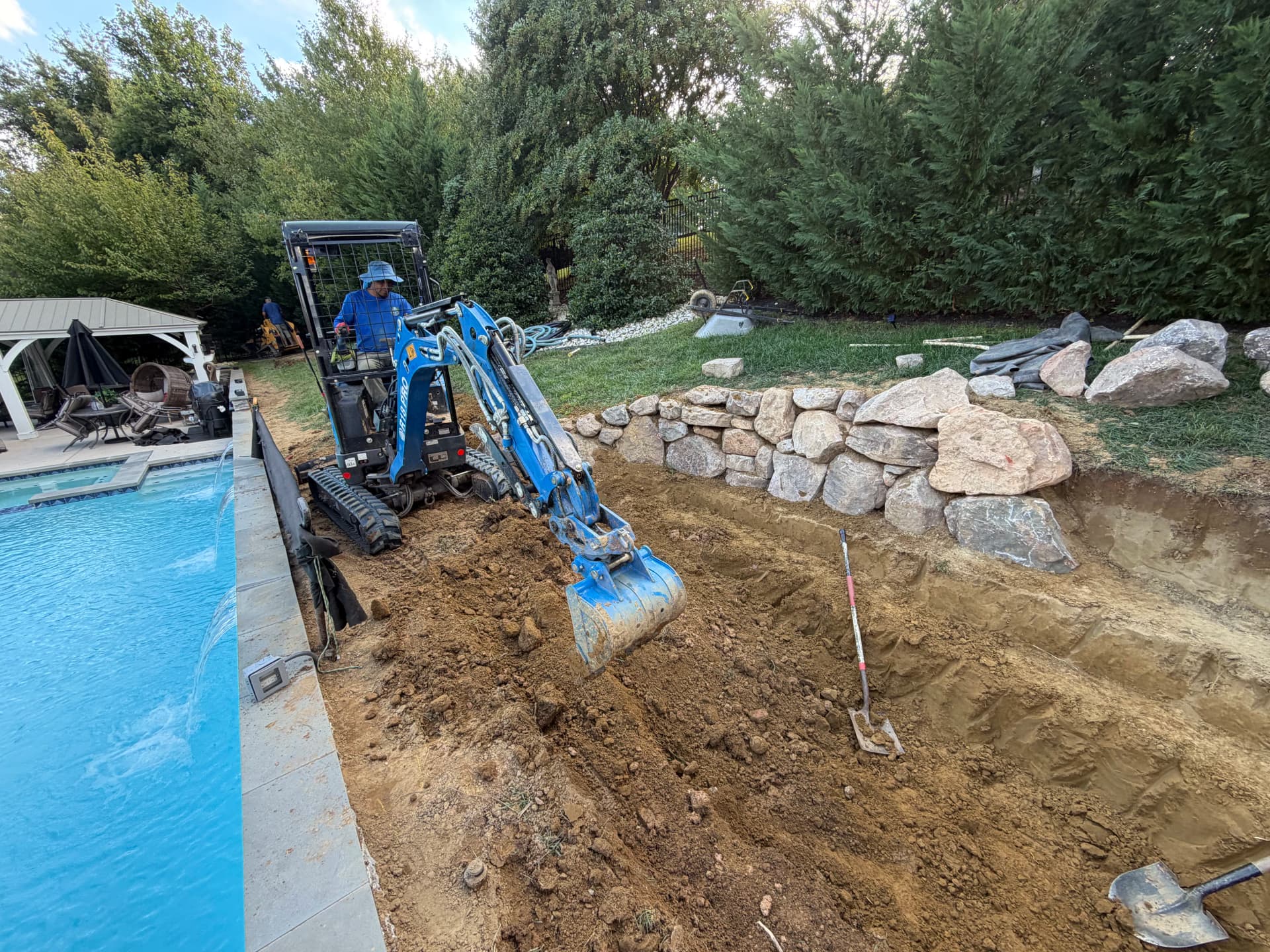
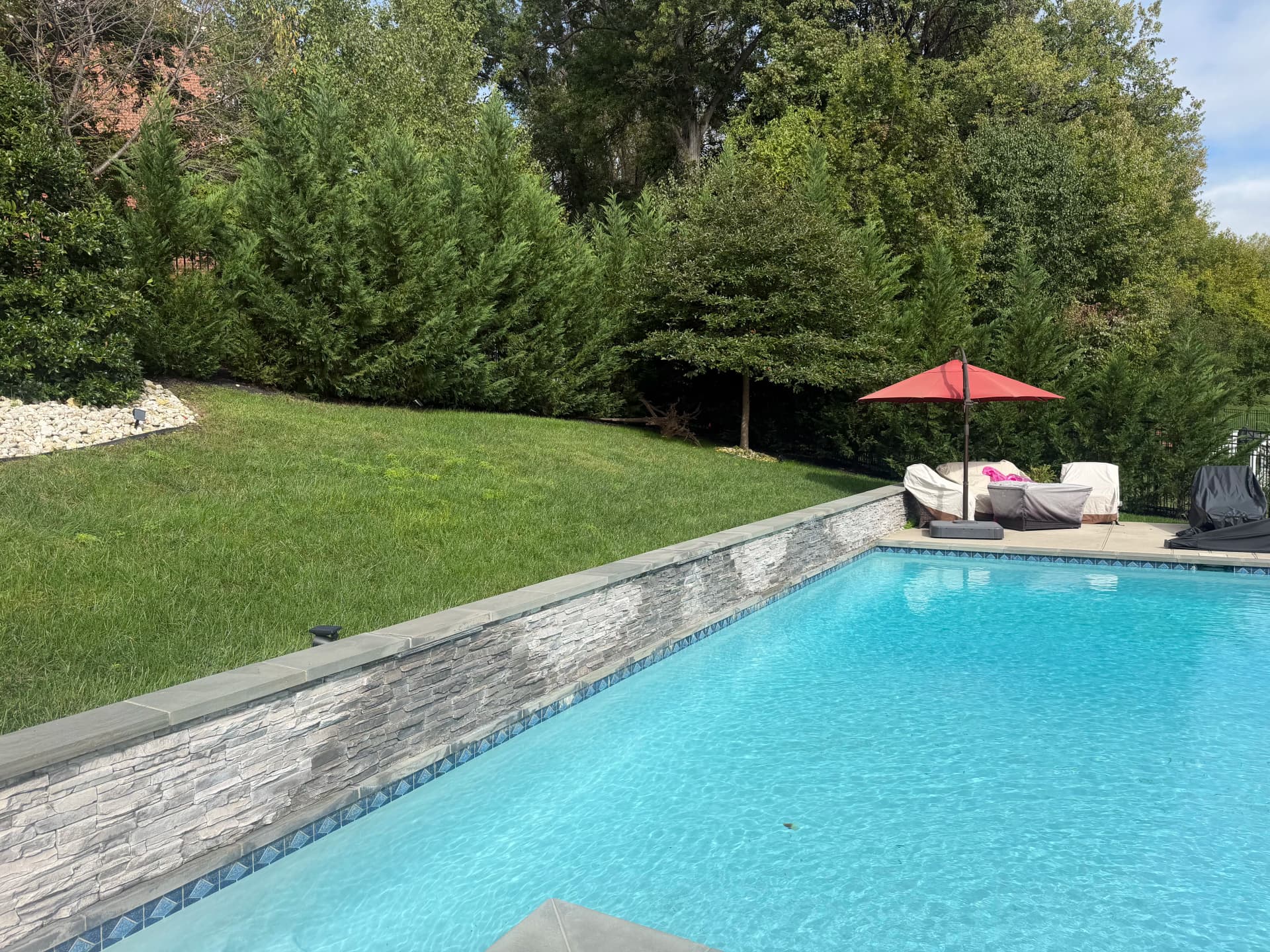
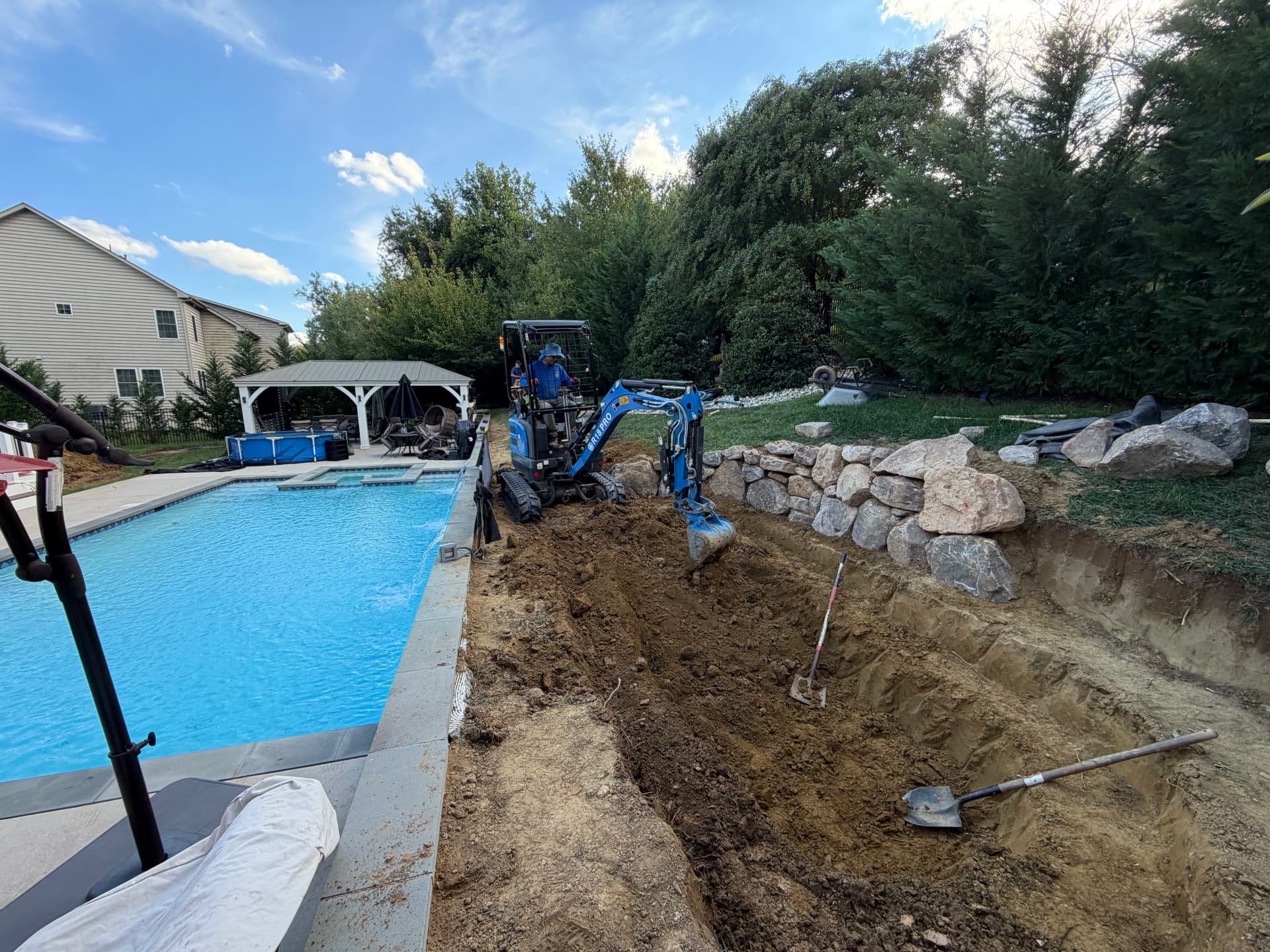
Here's what most people don't think about when they picture a koi pond - the work that happens before a single drop of water goes in. On this Upper Marlboro job, the backyard had a sloped hill running right along an existing pool. That kind of terrain doesn't just cooperate. You have to work with it, or the whole thing fights you later.
We brought in a mini excavator to carve into the hillside and dig out the pond basin. Working right next to an existing pool means precision matters - there's no room to be sloppy with your grades or your footprint. Every pass with the bucket had to be deliberate. The excavated area needed to be level, properly shaped, and ready to hold a structure that's meant to last for decades.
Once the hill was cut back, we built a natural boulder retaining wall to hold everything in place. Those aren't decorative touches - they're doing real structural work. Without that wall, you've got soil pressure pushing against your pond over time, shifting things, creating problems. The boulders lock the hillside in and give the pond a solid, stable boundary to sit against.
That's the part of pond construction that separates a well-built water feature from one that looks great for a season and then starts to settle and fail. The groundwork is everything. When you get this stage right, the rest of the build has something solid to stand on - and the finished pond looks like it genuinely belongs in the landscape rather than just sitting on top of it.
This is the kind of planning we put into every pond build we take on. Sloped yards, tight spaces, existing structures nearby - none of that is a reason to cut corners. It's a reason to slow down and do it right from the start.